Huntersville, NC Restorative Dentistry Services
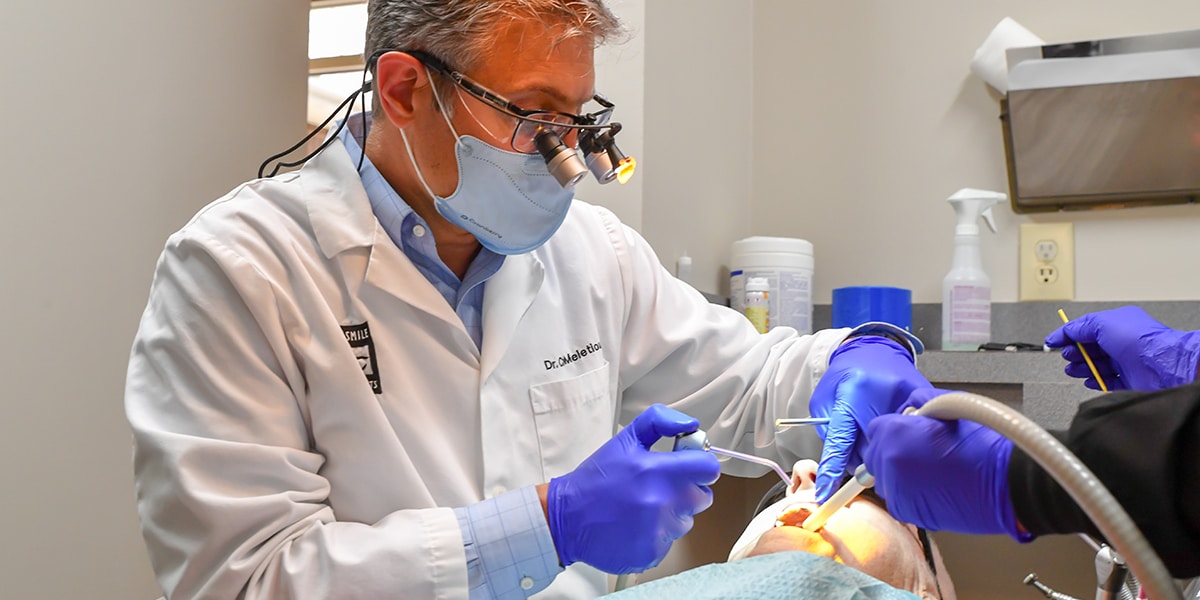
At The Smile Architects, our Huntersville, NC team offers a full range of restorative dentistry services. Reach out to 704-875-1621 for more information or to book a visit.
Timely Restorative Care May Help Lower the Need for Future Dental Work
Restorative treatments are designed to support oral health and overall wellness while also refreshing the look of a smile. The ability to chew comfortably and maintain proper bite alignment can influence a person’s health well beyond cosmetic appearance.
Our Approach to Biomimetic Dentistry
Biomimetic dentistry refers to rebuilding a tooth so it matches its natural biomechanical and cosmetic form and function as closely as possible. In simple terms, this approach mimics what nature already built. Only the decayed or damaged portion of the tooth is removed, and the restoration is then bonded directly to the healthy tooth structure that remains. Restorations built this way include stress reduced direct composite fillings, along with porcelain or composite inlays and onlays that help restore the natural biomechanics of a broken or damaged tooth.
The goal when rebuilding a damaged, broken, or decayed tooth is to bring it back to something close to its original strength, function, and appearance. This conservative approach can help achieve durable, natural looking results without removing more healthy tooth structure than necessary.
Tooth Colored Composite Fillings
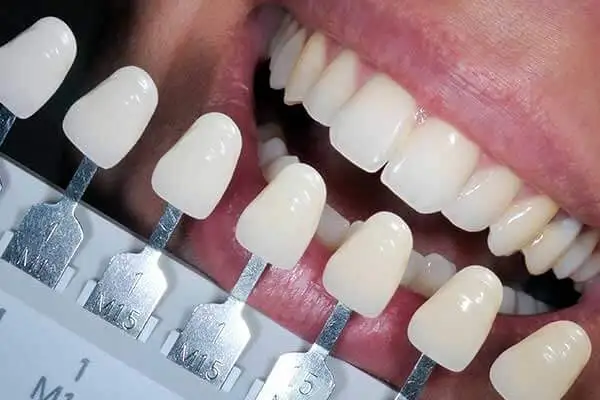
Composite fillings rely on a tooth colored material to repair cavities while keeping a natural look. After the decayed portion is removed, the tooth is filled with composite material and hardened with a curing light. This procedure can typically be completed in a single office visit.
Dental Inlays and Onlays
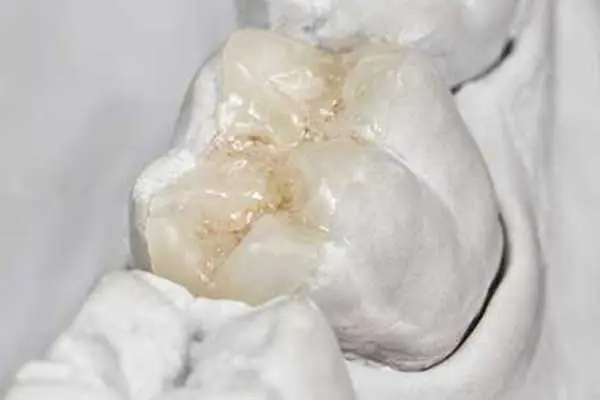
An inlay or onlay works as a partial crown, typically used when a tooth has lost too much structure for a filling to hold but still has enough remaining structure that a full crown is not required. These restorations are typically crafted from porcelain or gold and are designed to restore both the look and the function of the tooth.
Custom Dental Crowns
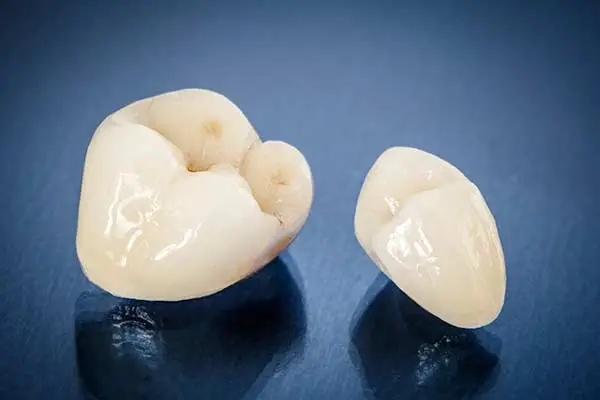
A crown fits over the entire visible portion of a tooth that has cracked, broken, worn down, or decayed significantly. This treatment typically takes two appointments to finish. At the first visit, the tooth is reshaped and an impression is taken, and a temporary crown is placed while the permanent one is being made. At the second visit, the permanent crown is fitted and bonded into place.
Fixed Dental Bridges
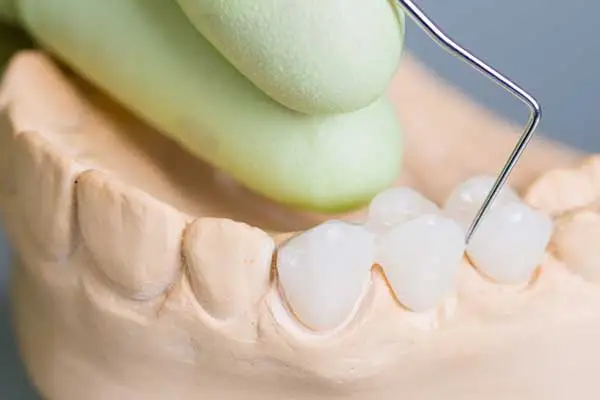
A bridge offers a way to fill the gap left by missing teeth without relying on a denture or a dental implant. It is built from two crowns with a replacement tooth or teeth positioned between them. The crowns typically anchor to the teeth on each side of the gap, holding the fabricated tooth or teeth securely in place.
When more than one tooth is missing, an implant can sometimes be used to help anchor the bridge instead.
Restorations for Dental Implants
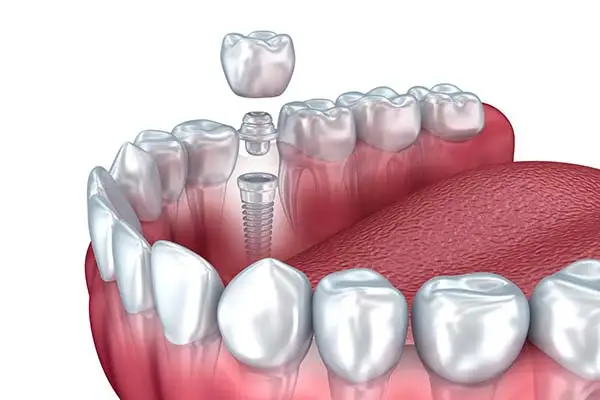
A dental implant is made up of three main parts, a small titanium screw that is biocompatible with the body, an abutment that links the screw to the final restoration, and the restoration itself. The screw is placed into the jawbone to act as a replacement tooth root, giving fixed or removable replacement teeth a stable foundation. Over the following months, the screw typically fuses with the surrounding bone through a process called osseointegration, after which the abutment is attached to allow the restoration to be permanently secured.
Partial and Full Dentures
A denture replaces several missing teeth within the same upper or lower arch. Unlike a crown or bridge, a denture does not depend on existing tooth structure and instead replaces the missing teeth entirely.
Denture options can include the following variations.
- Full or Partial Sets
- Removable or Fixed Options
- Traditional or Implant-Supported Types
Restorative Dentistry Questions We Hear Often
What does restorative dental treatment involve?
Restorative dental treatments are designed to bring back strength and function to a tooth affected by decay or injury. When tooth colored materials are used, these treatments can also help refresh the tooth’s appearance.
Which procedures count as major restorative dental work?
Many dental insurance plans typically classify crowns, bridges, dentures, inlays, and onlays as major restorative dental procedures.
What falls under basic restorative dental care?
Dental fillings are typically the most common basic restorative treatment, though some insurance plans also classify tooth extractions and root canal treatments as basic dental services.
What should I expect to pay for restorative dentistry?
Restorative dentistry covers a broad range of treatments, from a simple filling to a full set of dentures, so costs can vary widely depending on what is needed. During your consultation, our team can walk you through the treatment options available and give you a clearer picture of the expenses you may be responsible for.
Can a tooth with significant decay still be saved?
An in person evaluation is typically needed to know for sure, but many teeth can potentially be saved even with significant decay. When a large portion of the tooth is affected, a crown may be recommended instead of a filling. If the decay has reached the inner pulp of the tooth, a root canal treatment is typically needed first, followed by a crown.
Is it possible to treat all of your teeth in a single visit?
This typically depends on how many teeth need treatment and what type of care is required. Some patients can have every needed procedure completed in one visit, while others may need two or more appointments.
Looking for a dentist near Huntersville, NC? Contact us to set up your appointment.